
Waterfowl Hunts
Tidal marsh, open water and cut fields across the Chesapeake, hunted the way the day’s conditions actually call for.
Hunted to the conditions
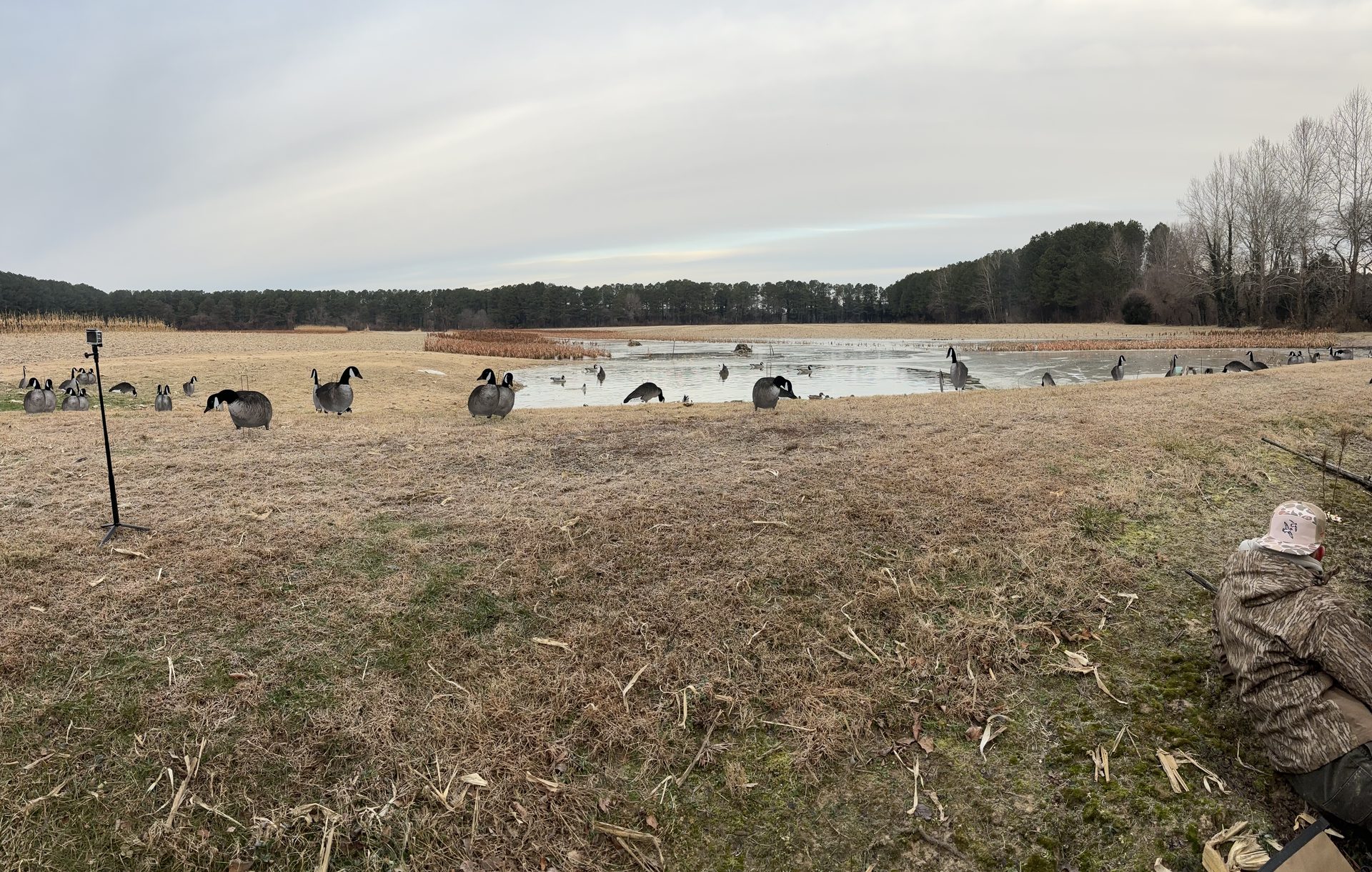
There is no single way to hunt the Chesapeake. Some days the birds want open water and a long line of divers. Some days it is a tucked-in marsh blind. Some days it is a field full of geese and a spread of full bodies.
We run mornings and evenings, four to five hours either way, so you can pick whichever suits you — a classic dark-o'clock start, or an afternoon hunt into the last of the light. We scout through the week and pick the setup that matches the wind, the tide and where the birds have actually been feeding, then we are in place and quiet well before you need to be.
Puddle ducks, divers and Canada geese all come into play depending on the season and the weather. Juanita, our titled retriever, does the swimming, so nobody is wading out into a January marsh to pick up a bird.
At a glance
- Season
- October – January
- Availability
- Morning or evening hunts
- Time out
- 4 – 5 hours
- Group size
- Up to 6 guns
- Setups
- Marsh blind, layout, field
- Quarry
- Puddle ducks, divers, geese
- Retriever
- Juanita, JH titled
- Rates
- On request
Prime dates in the second half of the season book earliest.
Check Available DatesPick your setup, or let us pick it
Tell us what you are after and we will match it. If you have no preference, we will simply put you where the birds are.
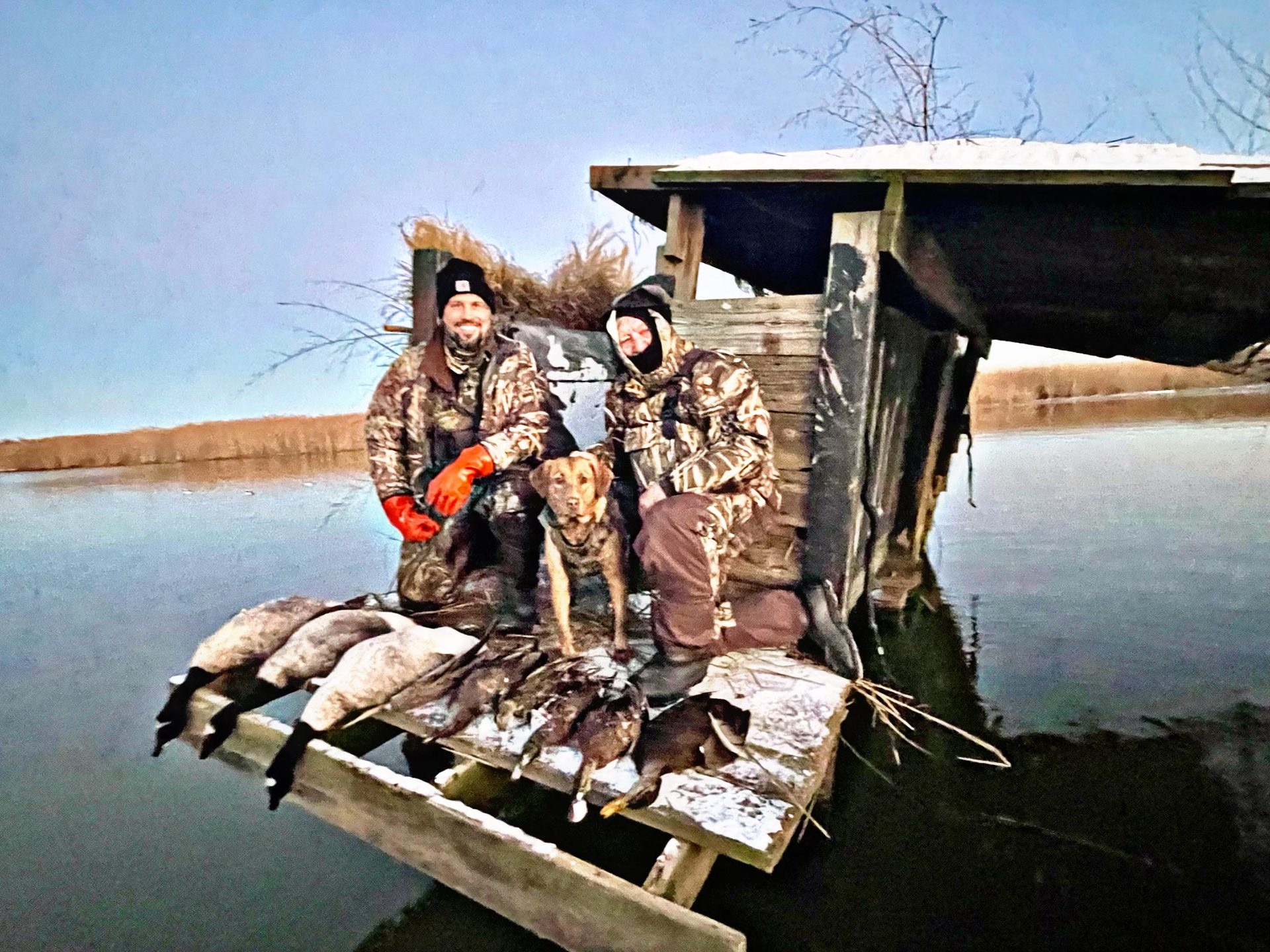
Marsh blind
Tucked into the grass on a tidal creek with decoys out front. Comfortable, sheltered and the most forgiving option for newer hunters or mixed groups.
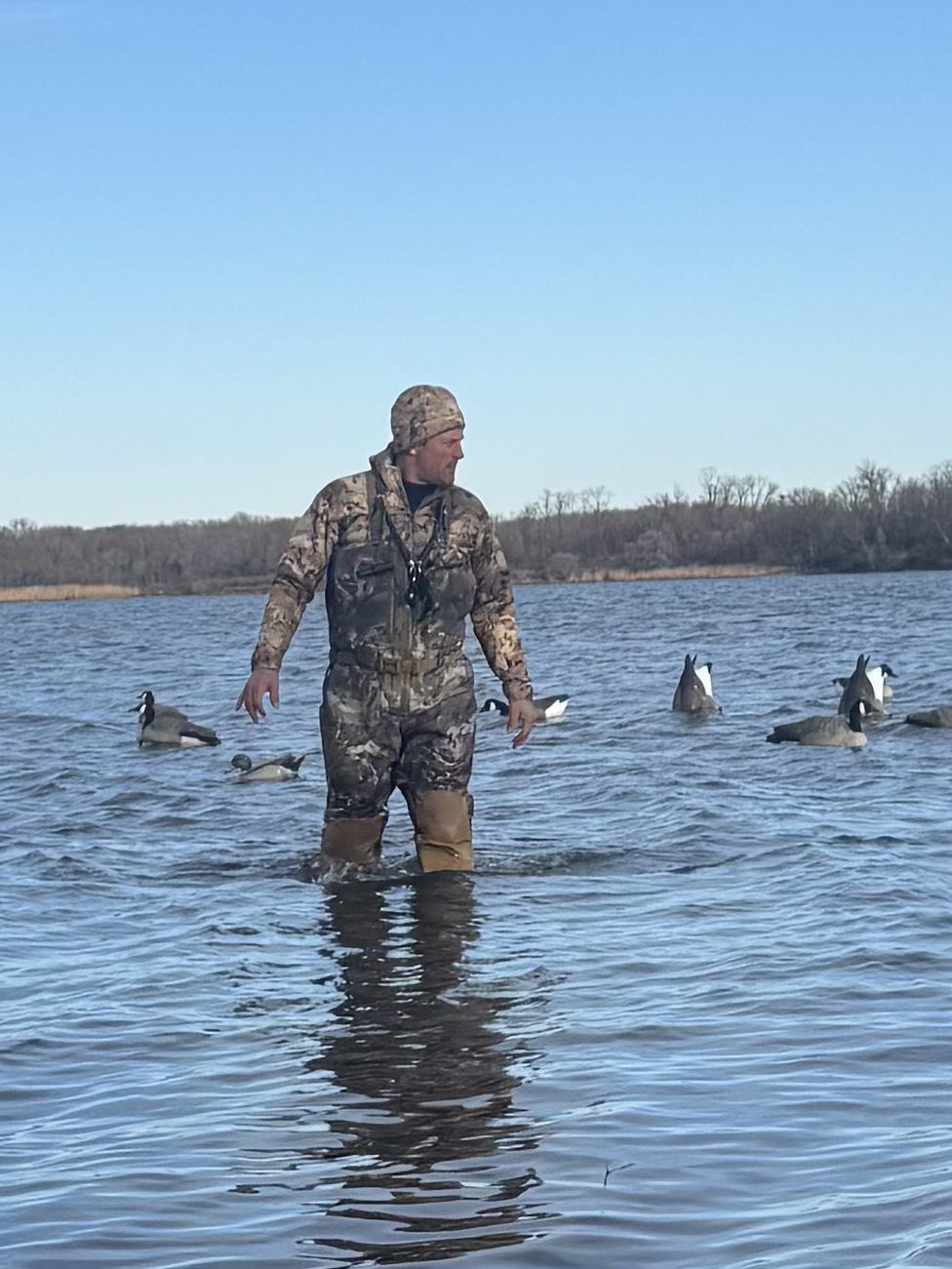
Open water
Long lines of divers off a point or a bar. Fast, low shooting and the closest thing to classic Chesapeake gunning you will find.
Cut fields
Full-body spreads for Canada geese over harvested ground. Big birds, close decoying and the best setup for a group that wants to see the show.
What we bring
- Blinds, layout boats or field blinds as conditions dictate
- Full decoy spreads — floaters, full bodies and motion
- Calling, and a captain who has scouted the week
- Juanita, our AKC Junior Hunter, to handle the pick-up
- Boat, fuel and all required safety equipment
- Bird cleaning at the end of the hunt
What you bring
- Maryland hunting licence, state stamp and Federal Duck Stamp
- Your shotgun and non-toxic shot — steel #2 to #4 covers most days
- Waders or insulated boots, and warmer layers than you think
- Gloves, a face covering and a hat in a natural pattern
- Ear and eye protection
- A thermos — it is a long, cold, excellent sit
First time buying waterfowl stamps? Ask us and we will send you the exact list before you spend a dollar.
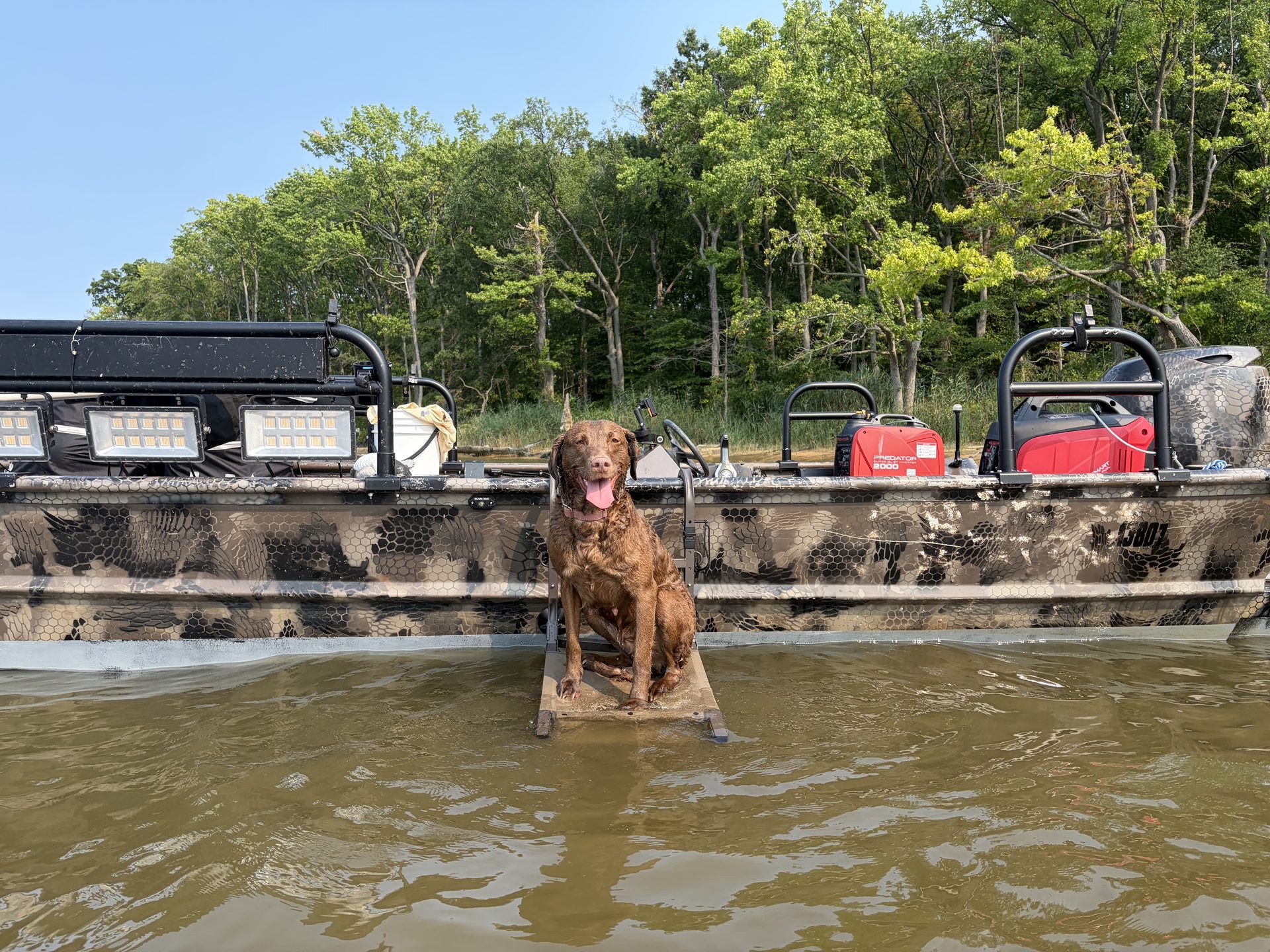
Meet Juanita
Nobody swims in January. Every hunt runs with Juanita, who marks, holds and delivers in the marsh and in open water — AKC registered as Old Town’s Hablo Ducks and titled Junior Hunter (JH).
It changes the hunt. Birds get recovered rather than lost, the group stays in the blind where they should be, and there is a lot less standing around in wet neoprene.
She is also, by a wide margin, the most photographed member of the outfit.
Out on the Chesapeake
Before you book
I have never hunted waterfowl. Can I come?
Yes. Say so when you book and we will put you in a marsh blind, which is the most forgiving setup, and keep the group small. We will cover gun safety, when to shoot and how to identify birds before anything gets loaded.
What licences and stamps do I need?
A Maryland hunting licence, the Maryland migratory game bird stamp, and a Federal Duck Stamp if you are 16 or older. Hunter safety certification is required to buy a licence. Tell us your situation and we will send you the exact list.
Morning or evening — which is better?
We run both, four to five hours either way. Mornings are the traditional choice and usually give you the most bird movement, but they mean meeting in the dark. Evening hunts are an easier sell if you are travelling in, driving up with kids, or simply not a pre-dawn person. Tell us which you would rather and we will work with it.
How many guns can you take?
Up to six, depending on the setup. Field hunts handle a bigger group comfortably; open-water layout hunting works better with fewer. Tell us your numbers and we will tell you which hunt suits.
Can I bring my own dog?
Sometimes — it depends on the setup and how your dog handles a strange blind and working alongside Juanita. Talk to us in advance rather than turning up with a dog we are not expecting.
What if the weather is bad?
Bad weather is often the best weather for ducks, so we hunt through a lot of it. What we will not do is put you out in genuinely unsafe wind or ice. If we cancel, you get first pick of another date.
Are kids welcome?
Very. Maryland runs youth waterfowl days, and a marsh blind with a dog working is a hard day to beat for a young hunter. Get in touch and we will plan something around their age and attention span.
Request a hunt
Send this over and Steve will come back with open dates, what it costs and the licences you will need to have in hand.
-
Call or text
(443) 992-1955 -
Response time
Within 24 hours, usually sooner
Bowfishing picks up in spring
When the birds head north the lights go on. Night bowfishing for snakehead, carp and catfish through March, April and May — every bit of gear provided, and no fishing licence needed.